
Voice4Change England launch new guidelines for “Survival Through Collaboration”
Voice4Change England (V4CE) have launched key guidelines addressing how infrastructure organisations, funders and partners can work collaboratively with Black, Asian, Minority Ethnic and Refugee (BAMER) groups.
Voice4Change England (V4CE) have launched key guidelines addressing how infrastructure organisations, funders and partners can work collaboratively with Black, Asian, Minority Ethnic and Refugee (BAMER) groups.
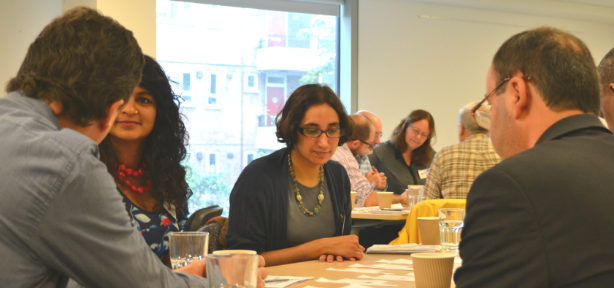
The launch of the recommendations, which took place on October 2 in London, highlighted some of the guiding principles in partnership and collaborative work. The document outlines some of the key ‘pros and cons’ to partnership and collaboration; how to negotiate changes and deal with differences; and a key framework for partnerships, collaborations and mergers.
 Saqib Deshmukh, V4CE Development Officer, who launched the document said: “As the cuts and general austerity kicks in many BAMER groups as well infrastructure organisations may wish to look at how they work together in collaborations or through more formal partnerships and even mergers. We want to work with groups such as LVSC and others in the sector to provide support and guidance and to also engage with funders to provide resources to enable this to happen.”
(Pic: Development Officer Saqib Deshmukh)
The practical guide ensures groups are clear about what is the driving force behind the partnership or collaboration and addresses some of the key barriers minority organisations face in such settings.
Some of the different models of collaboration discussed at the launch included partnership working, shared, services, shared-back office, mergers, group structure, networks, co-location, coalitions and shared-back office.
Ngoma Bishop of the arts organisation BEMA expressed that there is freedom being a small organisation but many spend a lot of time trying to form partnerships and fail on the delivery side of their work.
He explained: “There are many ways to describe collaboration in the context of working partnerships, but it is more about why you want to work together and what are you both trying to achieve in work objectives.
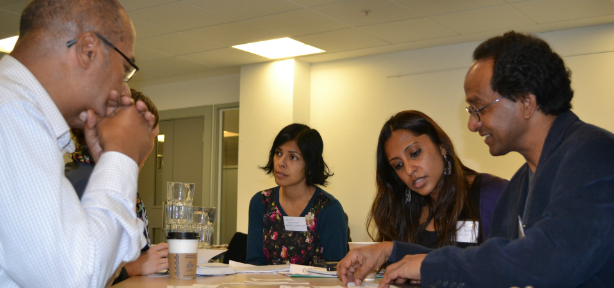
Mr Deshmukh continued: “Through developing a set of principles and a framework we are beginning this process to ensure that these processes take place ethically and the best interests of all parties but in particular BAMER groups.”
The guidelines were launched as part of the wider project Modelling Fair and Equitable Collaborations in partnership with the London Voluntary Service Council (LVSC) and funded by City Bridge.